
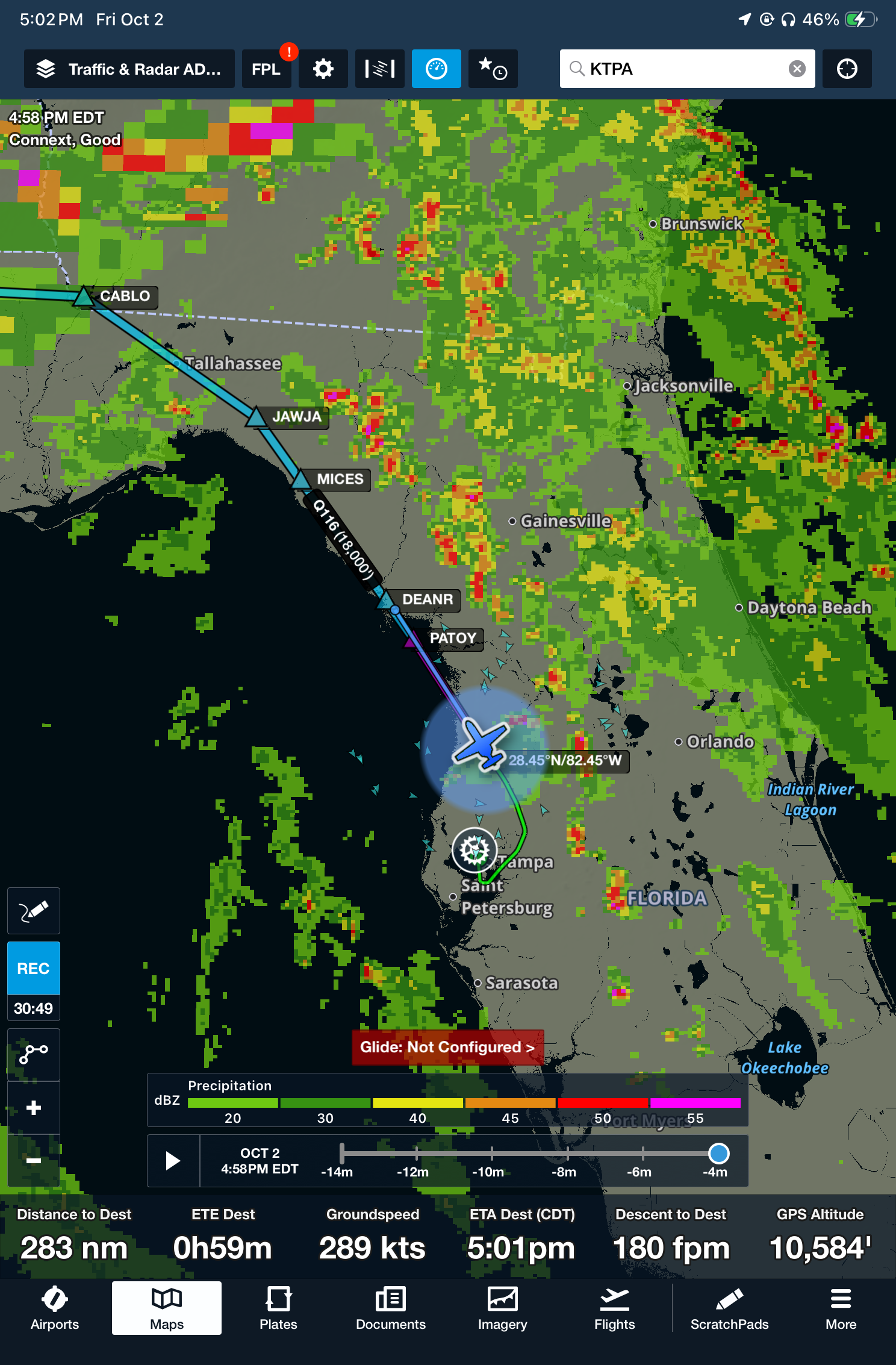
Man, doesn’t it feel great when you have your crap together?
You know the feeling. You know what’s coming, the airplane does what you want, and you have time to look outside, talk to ATC and enjoy yourself. You’re taking your family somewhere in your own airplane. This is why you bought the thing.
Then you have a flight where everything feels forced. You’re chasing the airplane, hunting for buttons and trying to figure out an approach while somebody talks to you. Nothing has necessarily gone wrong, but you’re working hard just to keep up.
You get there, but you don’t feel particularly good about how you did it. And when your family asks whether you had a good flight, you say yes, even though you spent most of it feeling behind.
What’s different between those two flights?
One of the biggest mistakes I see good pilots make is trying to solve that problem by rushing. They think they need to move faster, push the buttons faster or get better at handling everything at once. But how much of that work should have been done before the engine started?
Do your thinking on the ground and your flying in the air.
I want to do as little as possible in the airplane. The least amount of unnecessary button pushing, searching and figuring things out. I want enough brain cells available to deal with something that actually deserves my attention.
I learned some of this the hard way.
When I was a private pilot with a couple hundred hours, I took three of my siblings to a family reunion in our family’s 172. Crystal-clear VFR day. I drew a line on ForeFlight and headed to Mississippi.
About halfway there, Memphis Center called and asked whether I had checked the NOTAMs.
Well, you can probably guess where this is going.
The runway at my destination had been closed for a week. I hadn’t checked. Fortunately, another airport nearby was open, and my family came and picked us up after we landed.
It worked out. But it worked out because a controller caught something I should have known before takeoff. I had three of my siblings in that airplane, and I hadn’t bothered to find out whether we could land where we were going.
That’s an obvious preparation problem. The less obvious ones are easy to overlook because we usually get away with them.
You know how to fly an approach, so you leave figuring out the arrival until you’re almost there. You pick an alternate because ForeFlight needs something in the box, but you haven’t really looked at whether it makes sense. You assume you’ll figure out the avionics when ATC gives you the clearance.
Then all those things show up at once, and now you’re behind the airplane.
Master pilots operate in terms of known quantities. We brief what we fly, and we fly what we brief. We know what we expect the airplane to do, how we’re going to make it happen and what we’ll do if the plan stops working.
That takes more than memorizing what your CFI told you. You need to understand why you’re doing it, because eventually the situation is going to be different from the one you practiced.
I want you to be reliable instead of merely reliant. When something changes, you should have enough understanding to look at your options and make a decision you believe in.
Here’s one way to work on that: when you pick an alternate, ask yourself what would actually make you use it.
Let’s say there’s weather that could become a problem during the second half of your trip. Where could you stop? What’s the weather doing there? Can you get in? Do you have the fuel? At what point would you decide to land and wait?
Work through that before you leave. Now, if the weather develops, you already have a course of action to evaluate. You still need to check that it works, but you aren’t starting from scratch while flying toward the problem.
And when I say alternates, I don’t just mean the alternate airport on your IFR flight plan. I mean alternate routes, alternate airports and alternate courses of action. Maybe you leave later. Maybe you stop halfway. Maybe you go around. Maybe you stay home.
I want you to get more useful flying out of your airplane without adding unnecessary risk to the mission. Sometimes a little more understanding and preparation will make a flight work. Sometimes it will show you exactly why it won’t. Either way, you ought to know why you made the decision.
Of course, you still have to be able to execute the plan.
Do you know the pitch, power and configuration your airplane needs? Can you make the avionics do what you want and verify that they’re doing it? Or does every clearance change turn into a research project?
If a normal IFR approach already takes everything you have, how much is left when something actually goes wrong?
Flying regularly doesn’t mean you’re proficient in the things you never practice. I found that out during recurrent training when I forgot important memory items and froze. I had several thousand hours and was flying all the time. It still happened.
That changed the way I studied. Being comfortable in the airplane wasn’t enough.
Train on the things that give you trouble. Practice the buttonology, brief the profiles and work through unfamiliar situations with an instructor who will hold you accountable. A home simulator is a great place to stop, ask questions and repeat something until you understand it.
I want normal flying to become boring. I want you to have the routine stuff handled well enough that you can pay attention to the rest of the flight. Then, when something changes, you have some capacity left to deal with it.
You’re obviously still going to think in the air. The plan has to change when the situation changes. But don’t use up all your mental juice doing work you could have finished while you were sitting comfortably on the ground.
Before your next flight, take a look at what you’re expecting yourself to figure out along the way.
How much of that could you handle right now?